

Your marketing may not be the real problem.
You may already have a website, run ads, post on social media, or receive calls from local customers. But if leads disappear between the first inquiry and the booked job, more marketing only creates more leaks.
Industry benchmarks commonly show that 30–40% of inbound calls to cleaning businesses go unanswered during peak hours. When you are on a job, driving between locations, or managing your team, that missed call can become someone else’s booking.
Recurring clients make the gap even more important. A biweekly cleaning customer can be worth 10–20 times more than a one-time booking over the life of the relationship, depending on service price and retention.
The answer is not always “do more marketing.”
The answer is fixing what happens after marketing creates demand.
1. You miss calls while you’re doing the work
You’re cleaning a home. Walking a commercial property. Driving to the next appointment.
The phone rings. You miss it.
The caller may not leave a voicemail. They may call the next company instead.
That is a serious problem when peak-hour missed calls can account for 30–40% of inbound demand. Your marketing may be working. Your business simply isn’t available at the moment the lead is ready to act.
How to fix it: Add an immediate missed-call text-back that acknowledges the call, asks what the customer needs, and gives them a clear path to book.
2. Your response time is too slow
A lead who waits several hours for a response is not waiting patiently.
They are comparing options.
Cleaning customers often contact multiple providers at once. The company that responds first gets the first chance to qualify the job, answer questions, and schedule the service.
A response tomorrow is not competitive with a response now.
How to fix it: Use automated responses to acknowledge every inquiry immediately, then route qualified leads toward a quote or booking.
DDS systems average a 90-second response time because the first response should not depend on whether you are holding your phone.
3. You follow up once, or not at all
Some customers are ready to book immediately. Others need time.
They may be checking their schedule, comparing prices, asking a spouse, or waiting for payday. If you send one reply and stop, you lose leads that were still possible to close.
Manual follow-up also creates an exhausting routine. You have to remember who asked for a quote, when to text them, and what you already discussed.
How to fix it: Build a short SMS and email follow-up sequence that keeps the conversation moving until the lead books, declines, or stops responding.
Follow-up should be consistent without becoming pushy.
4. Your booking process creates phone tag
A customer calls. You miss them.
You call back. They are at work.
They call again. You are on another job.
Soon, a simple cleaning appointment becomes a chain of missed calls and delayed replies.
Phone tag makes your business feel harder to buy from, even when your service is excellent. It also puts a limit on how many leads you can handle in a day.
How to fix it: Give customers a simple online booking option with available service times, basic job details, and a confirmation process.
Your calendar should help close the job instead of forcing you to coordinate every appointment manually.
5. Your leads are scattered across your phone, inbox, and notebook
Where is the lead who requested a quote last Tuesday?
Is that phone number from a new customer, an existing client, or someone you already contacted?
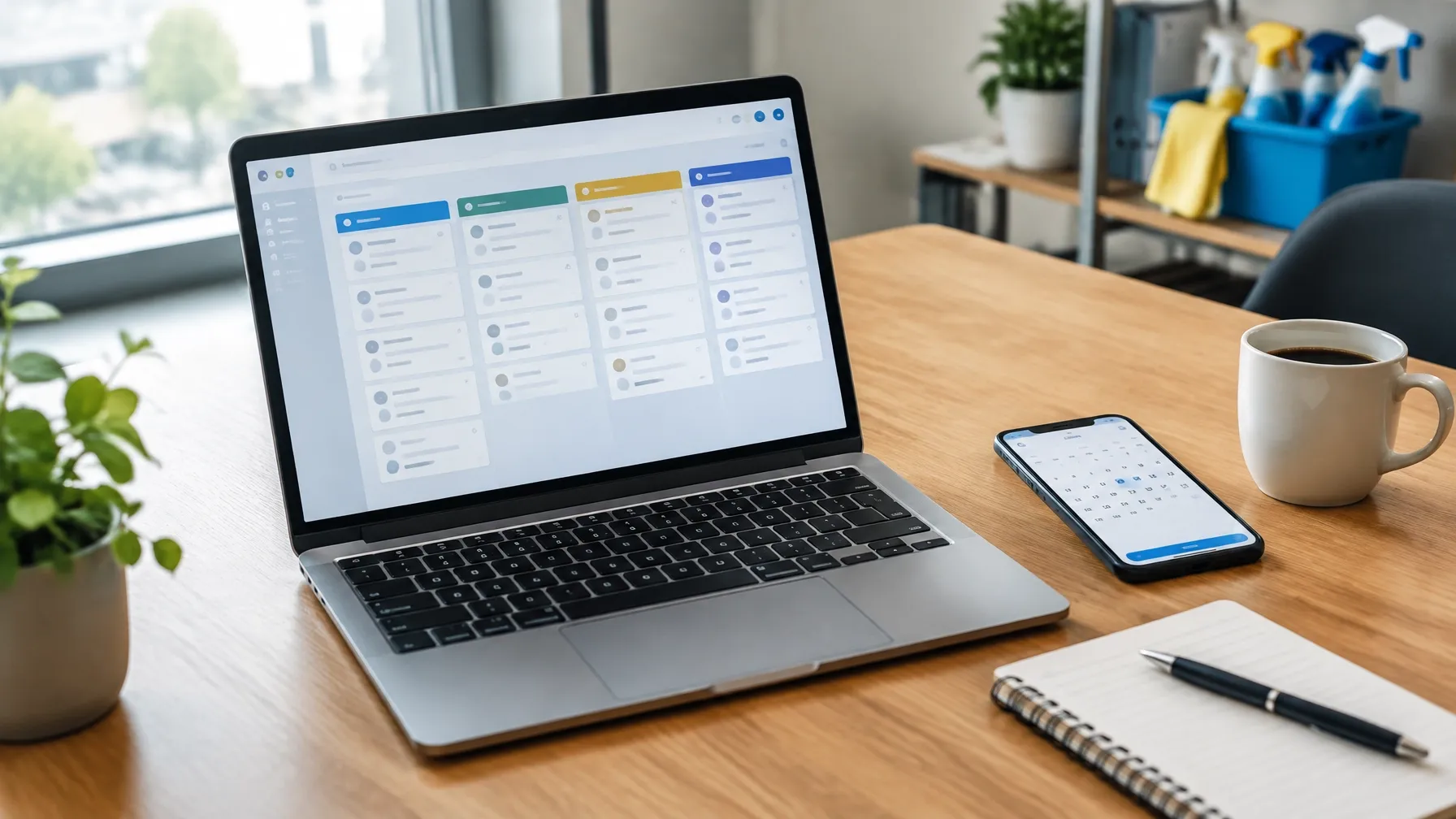
When leads are spread across text messages, missed calls, email threads, paper notes, and memory, opportunities disappear. You also cannot see which prospects are new, which need follow-up, and which are ready to book.
How to fix it: Put every inquiry into one connected lead pipeline. Track the source, service type, conversation, follow-up status, and booking outcome in one place.
You should be able to see what needs attention without reconstructing your week from scattered notes.
6. You have no system for generating reviews
A great job does not automatically create a review.
Many happy customers will never remember to leave one unless you ask at the right time. That means your reputation grows slowly, even when your service deserves more visibility.
Reviews are especially important for local cleaning companies. A new customer wants proof that you are reliable, professional, and worth inviting into their home or facility.
How to fix it: Send an automated review request after completed jobs, while the customer still remembers the result.
The request should be simple, timely, and connected to your customer process, not another task you have to remember at the end of a long day.
7. You do not know which marketing produces bookings
You may know how many leads came in.
But do you know which source produced paying customers?
Without clear tracking, you cannot tell whether bookings came from your website, Google Business Profile, referrals, social media, paid ads, or a previous customer. You keep spending based on activity instead of results.
More clicks do not always mean more revenue.
How to fix it: Track the full path from source to inquiry to booked job. Review lead volume, response time, booking rate, revenue, and recurring conversions.
DDS systems are built around revenue visibility, not vanity metrics. The goal is to understand what creates booked work.
8. Your marketing advice is generic
Cleaning companies do not operate like software companies, retail stores, or general contractors.
You work around service areas, travel time, job types, crew availability, recurring schedules, quote requests, and customers who often call while your team is already working.
Generic marketing advice rarely accounts for those realities. It may tell you to “post more content” without fixing missed calls, follow-up, booking friction, or recurring client conversion.
How to fix it: Use a system designed specifically for residential cleaning services, commercial cleaning companies, and facility maintenance groups.
DDS works exclusively with the cleaning industry. That focus shapes the messaging, automations, booking flow, and follow-up process around how cleaning businesses actually win and retain customers.
9. Your marketing stops when the schedule gets busy
When business is slow, marketing feels urgent.
When the schedule fills up, marketing gets pushed aside.
Then cancellations happen. A crew member leaves. A recurring client pauses service. The calendar opens up, and you have to start marketing from scratch again.
That creates an unpredictable cycle: chase leads when you need them, stop when you are busy, and repeat.
How to fix it: Install an always-on system that captures demand, responds to inquiries, follows up, and generates reviews whether or not you have time to manage it that day.
Your marketing should keep working during busy weeks, not disappear because operations are demanding your attention.
10. You treat a one-time clean as the finish line
A one-time cleaning job is revenue today.
A recurring client can create revenue every week, every other week, or every month. Over time, that customer is worth far more than a single booking.
Research and industry examples consistently show that recurring cleaning clients generate thousands in relationship revenue compared with hundreds from many one-time bookings. The acquisition effort may be similar. The long-term value is not.
How to fix it: Build your customer journey around the next booking. Present weekly, biweekly, or monthly options clearly. Follow up after the first service. Ask for the review. Make recurring service easy to choose.
The first clean should open the relationship, not end it.

Fix the leaks between leads and booked jobs
Effective marketing for cleaning businesses is not only about attracting attention.
It is about what happens next:
- Capture every inquiry from your website, chat, forms, and phone calls.
- Respond quickly, even when you are on a job.
- Book qualified customers without unnecessary phone tag.
- Follow up until the lead makes a decision.
- Reviews build trust and improve the next customer’s decision.
That is the operating model behind the DDS customer acquisition system.
You get the website, AI chat, missed-call text-back, online booking, automated SMS and email follow-up, and review generation connected into one pipeline. The system is fully installed for you and typically goes live within 10–14 business days.
DDS systems average 90-second response times, a 3.8x average ROI, and hundreds of leads generated monthly.
Stop adding marketing to a leaking system
If your leads are not turning into enough booked and recurring jobs, the issue may not be visibility.
It may be the gap between the first inquiry and the final booking.
Book a free cleaning business growth review at Diego Digital Systems. You’ll see where your leads are leaking, what should be automated first, and how to build a cleaner path from inquiry to recurring revenue.